
Kenny: The MArxist Who Would be Mayor
Buried in a mislabeled box at the Wayne State Library in Detroit: hours of unseen 16mm footage capturing one of the most explosive and overlooked figures in American political history. Ken Cockrel Sr. was a Black Marxist-Leninist attorney. He used the courtroom as his battleground for change. He took on cases against the Chrysler Corporation. He took down STRESS - one of the most violent police units in history. He took on cases no other attorneys would dare take on. And he won them all.
This film weaves together the never before seen archival 16mm footage with police testimony, including frank admissions of guilt, and intimate interviews with the people who knew him best before his untimely death.
DETROIT
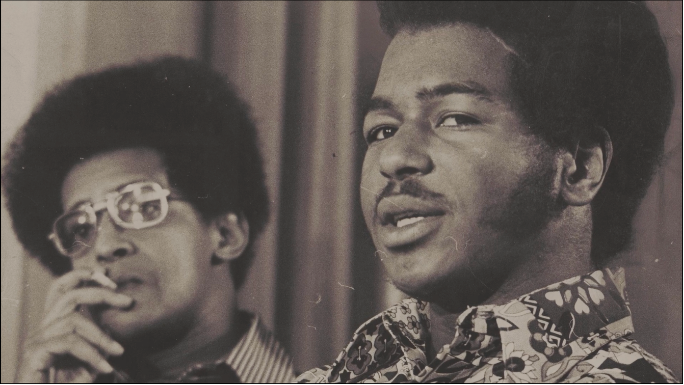
In the late 1960’s and early 1970’s Detroit was a paradox. A city at its peak. Teetering on the edge of massive decline. With a population of 1.4 million, it was the fourth-largest city in the U.S. and the wealthiest city, per capita. But beneath the surface, systemic racial inequality defined daily life. Detroit remains the only major American city to have been placed under martial law three separate times. All in response to uprisings stemming from racial injustice.
In 1967, two things happened that would shape the history of Detroit and the country. On July 23rd, the Detroit Rebellion began - the most deadly (43 deaths) and costly riot in the U.S. Two months later, Ken Cockrel passed the bar exam.
Cockrel entered the legal system not as a participant, but as a challenger. Fighting for working class Detroiters in courtrooms that were never built for them. He spoke like Mohammed Ali. Had the swagger of Miles Davis. And was a walking contradiction - a Marxist Leninist that drove Porsches and Corvettes. His law firm was bombed. He was profiled by the FBI and was included in their McCarthy era - Red Files. He was almost disbarred during his first case for calling the judge a “honky dog, racist, bandit, fool” - in court. His reputation for surgical cross-examinations, sharp-tongued intellect, and fearless advocacy earned him the respect of both his allies and his adversaries.
In the landmark Chrysler v. Johnson case, Kenny took on the defense of James Johnson Jr. - a Black autoworker who fatally shot three employees at Chrysler’s Eldon Avenue plant. Kenny changed the narrative of what was seemingly an open and shut case. He challenged the jury selection process (one that changed the jury selection process across the US). He argued that the trauma James Johnson carried from a childhood in the Jim Crow South was central to understanding what happened at the Chrysler Plant. James’s mom testified in court that James witnessed his Uncle was lynched on their front lawn. And that growing up as a sharecropper didn’t change much as his family followed the labor migration north.
Where the conditions at the Chrysler plant is what drove James to murder. His foreman called him “boy” and worse. He was taken off the line in favor of a white worker and was forced to work in the foundry without proper protection from the heat. Ken argued that it wasn't James who pulled the trigger, it was the Chrysler Corporation. Because of Kenny’s unconventional and relentless defense - Johnson was found not guilty. But the jury also found the Chrysler Corporation responsible due to conditions of the workplace. Ken and his legal team were even able to get James back pay.
It was a legal coup. The kind that instantly made headlines. The case was covered by The New York Times, picked up by local stations across the country, and followed closely in factory towns as far away as Turin, Italy. Folk songs were even written about it. This wasn’t just a win. It was proof that the system, when forced, could be made to answer
HAYWARD BROWN TRIALS
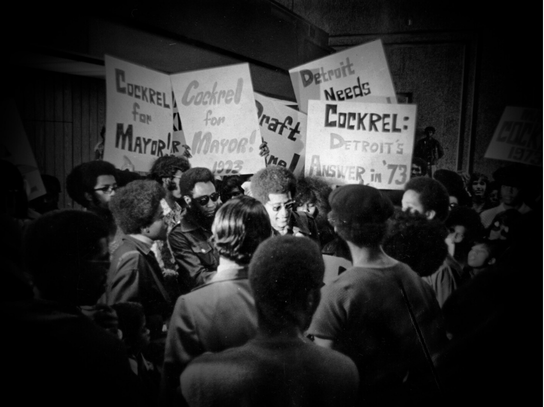
From the onset, Kenny spoke out against STRESS. Meetings were called. Petitions were signed. And after the murders of teenagers Ricardo Buck (age 15) and Craig Mitchell (age 16) Kenny organized a protest. Over 10,000 people marched down Woodward to Capital Park where Kenny gave a rousing speech.
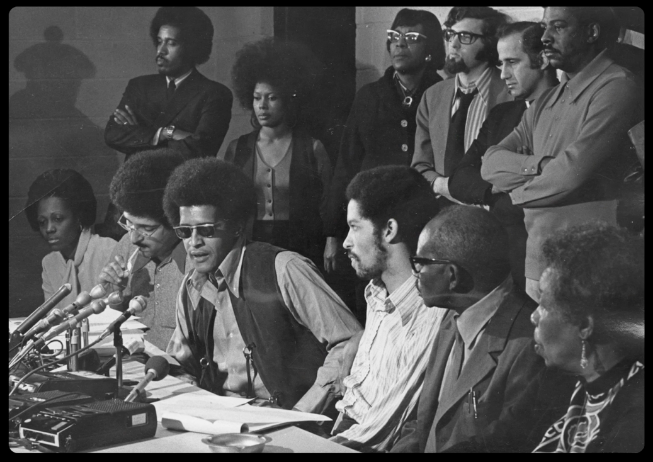
Later in that same year, in his most pivotal case, Kenny defended Hayward Brown. Hayward was charged with three capital cases, involving the killing of a white STRESS officer. Instead of pleading guilty, Kenny plead Hayward innocent and dismantled the prosecution piece by piece. Ken never called a witness. He used the STRESS officers' testimony against them.
He won all three cases.
The Hayward Brown trial in 1973 was bookended by the Mayoral election. The election was a referendum on power and policing. On one side was Coleman Young, a Black state senator. On the other, Police Chief John Nichols, the architect of STRESS.
The outcome of a city with 1.4 million people, was shaped by the terror and brutality of a 100-man police unit. Coleman Young won by just under 10,000 votes. A razor-thin margin that said everything about the city’s breaking point.
During his first week in office, Mayor Young signed his first executive order - the abolishment of STRESS.
STRESS
In the aftermath of the 1967 Rebellion, the city responded with a militarized approach. In 1971 the Detroit Police Department created an undercover unit called STRESS (Stop the Robberies, Enjoy Safe Streets). The unit was comprised of 100 men, the majority of which were white. Most of the officers were from the South and had also seen action in Vietnam. In their first year of existence, STRESS murdered 15 African Americans. By the end of their second year, the number had reached 22.
Ray Peterson (who was known as Mr. STRESS) was responsible for 9 of the murders. In interview footage we’ve obtained Peterson admits to planting weapons and committing murder without provocation. The community called it what it was: execution without trial.
MAYORAL RUn
In the late 70’s Ken made several moves to become more politically involved. He easily won a City Council seat and served for four years. But, Kenny decided not to run again for reelection and instead focused his attention on a Mayoral run.
Ken set a meeting with Mayor Coleman Young to let him know his intentions of a Mayoral run. The night before the meeting, on April 25th, 1989, Ken had a massive heart attack and died at the age of 50.
The city never recovered.
END
In subsequent years, the population fell by over 800,000. For several decades, Detroit was in the top 5 for murder and crime. And eventually, became the first major American city to declare bankruptcy.
The story of Ken Cockrel Sr. is not just a history lesson. It’s a mirror. A warning. Today, due process is eroding. Rights once assumed are vanishing. But we don’t need to draw a straight line between then and now. The parallels speak for themselves.
Change has never come from those in power. It’s been forced by those bold enough to confront it.
Kenny didn’t ask for permission. He didn’t wait for reform. He made the system answer to him and bent it to his will.
Ken Cockrel Sr.’s Bio
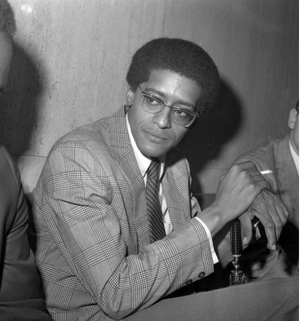
Kenneth Cockrel Sr. was born November 5, 1938 in Royal Oak Township, a poor, Black community just across Detroit's northern border. His parents, Sye and Cynthia Cockrel, died when he was 12 years old and he was raised by relatives in Detroit. After dropping out of school in 1955, he joined the Air Force and was trained as a weapons technician, stationed in Germany. Returning to the United States, he enrolled in a special program for adults without diplomas at Wayne State University in Detroit, earning a B.A. in political science in 1964. Realizing that law would be at the center of the struggle for social and economic justice, he entered Wayne's Law School and earned his J.D. in 1967.
As the sixties heated up, so did Ken Cockrel's politics, and much of that activism was played out on Wayne's campus, where he became something of a celebrity. While working at the Detroit News to pay his way through school, he met Mike Hamlin and John Watson, who were organizing black auto workers, and with others, they formed the League of Revolutionary Black Workers in 1969 as an umbrella organization uniting local Revolutionary Union Movements, like DRUM, and their support groups. In 1971, after political and personal differences forced his resignation from the League and the Black Workers Congress, Cockrel and some Motor City Labor League defectors formed the multi-racial Labor Defense Coalition, which was instrumental in forcing the dismantling of STRESS, the undercover police unit reviled in Detroit's Black community.
At the same time, in the late 1960's, Cockrel helped found Philo, Maki, Ravitz, Pitts, Moore, Cockrel & Robb, a law firm which, under various names, provided legal representation for individuals and organizations involved in the struggle against political and economic repression. Over the next ten years, he and his colleagues earned reputations as crusaders for working and poor people by winning a number of high-profile lawsuits that put the establishment on trial—the judiciary and jury selection process in New Bethel, the corporation and assembly line in James Johnson, the police in Hayward Brown and Madeline Fletcher.
By 1977, when he was elected to a seat on the Detroit City Council as an "independent socialist," Ken Cockrel had become the most well-known and influential radical in the city, respected, even by his adversaries, for his intellect, rapid-fire eloquence and passionate commitment to fighting inequity and injustice. But disillusioned at his inability to use his Council position to improve conditions in the city, he decided not to run for re-election in 1981. He returned to the practice of law, ultimately rejoining his friend and former colleague, Justin Ravitz, at Sommers, Schwartz, Silver & Schwartz in 1988, and was considering a run for mayor when he died of a heart attack on April 25, 1989.
Stay up to date on Kenny
Get updates on screenings, festivals, news and more…